
Speeches
Speech by Minister of State for Defence Desmond Choo at the 27th Asia-Pacific Programme for Senior Military Officers (APPSMO) on 28 September 2026 at Grand Copthorne Waterfront Hotel
28 September 2026
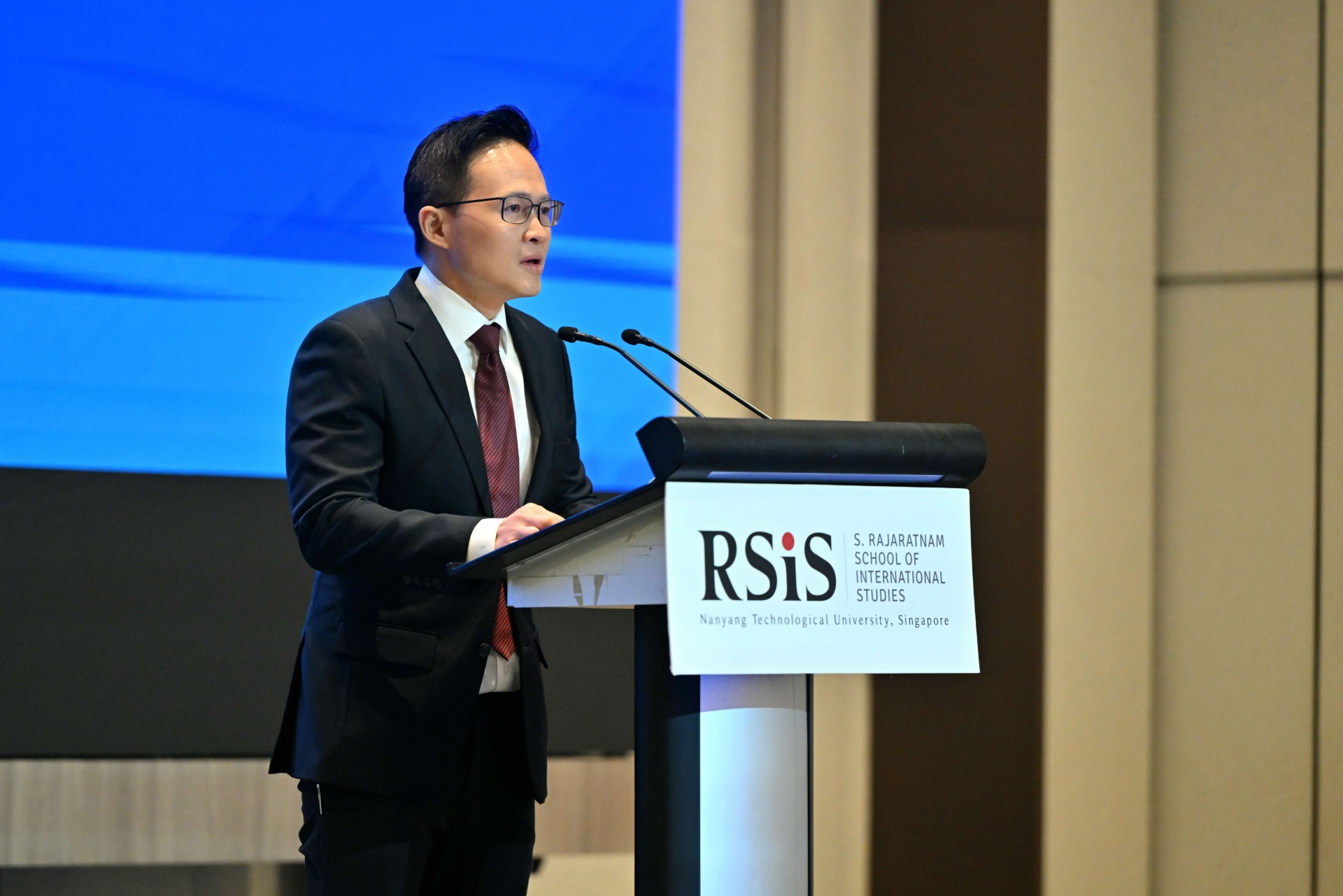
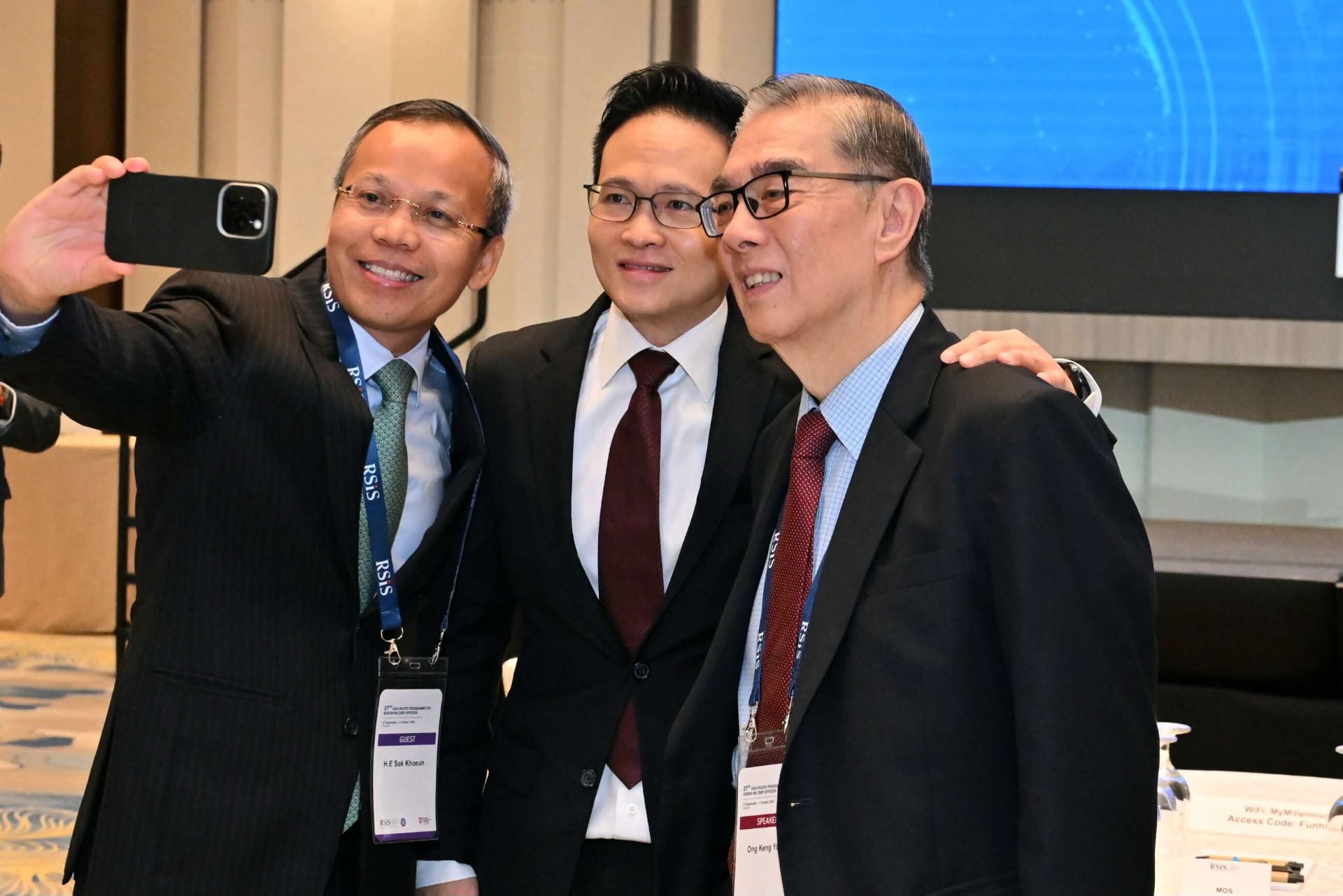
Ambassador Ong Keng Yong, distinguished guests, ladies, and gentlemen, a very good morning.
Thanks to the RSIS for inviting me to speak at APPSMO again. It is a pleasure to be back. Apparently, what I said last year wasn’t enough to “disqualify” me or allow me to graduate. So let me try again this year. Ambassador, thank you so much for your invitation.
Since we last spoke – I remember last year we spoke about the war in Ukraine, which has shown no signs of slowing down – the conflict in the Middle East has broadened significantly. If anyone was here last year, we wouldn’t have spoken about the Middle East issue. Now, these are very busy and trying times for military professionals and people in the defence business.
So, as you begin your week of exchanges, I would like to offer some thoughts on our theme, “Security in the Age of Complexity: the Future of Military Affairs”.
Now usually when we speak about the military of the future, we ask what has changed, what will change, and how we should change accordingly. These are fair and important questions.
We are living in a period of profound change in the security environment where the very character of conflicts is evolving rapidly. This is driven by technological developments, increasingly disconnected, interconnected and, at the same time, fracturing systems.
Militaries are well aware of how the increased accessibility of low-cost weapon systems such as drones are changing their concepts of operations. This includes rapid developments in AI and cyberspace.
Larger and more sophisticated militaries must increasingly expect to be challenged by relatively inexpensive and widely available systems. On the other hand, for resource-scarce countries, these technologies allow their militaries to strengthen and complement conventional capabilities. Economic security has also become inseparable from national security. Military power depends not only on the capabilities a country possesses, but also on the industrial capacity, infrastructure, and supply chains that sustain them.
These developments have understandably prompted us to think and rethink about how our militaries must change. But as we prepare for the future, we must be clear about both what must change and what must endure. Let me offer a few suggestions.
Adapting How We Build Military Advantage
First, how we build military advantage must continue to evolve. What has not changed is the need for credible defence. This is something we all know. Countries must take and continue to take responsibility for their own defence. But what credible defence requires today, and how militaries achieve it, will continue to evolve.
Advanced conventional capabilities will remain essential. But with technology developing quickly, military advantage will also depend on how quickly we can harness new technologies. We need to identify their potential, test, integrate, understand their weaknesses, and scale them effectively.
For Singapore, this means building a Singapore Armed Forces that can adapt as quickly as the technologies and threats around us as things evolve. Digital developments, for example, have expanded beyond the domains in which our militaries must operate. Cyber threats, disinformation and other forms of digital contestation can affect our security even short of full-scale war. We have changed how the SAF is organised. In 2022, we established the Digital and Intelligence Service to strengthen our ability to operate and defend ourselves in the digital and information domains.
Building Resilience through Partnerships
Next, we’ll talk about building resilience through partnerships. Yet, even the most agile military cannot develop and sustain all capabilities it needs on its own. Militaries cannot build resilience in isolation. We depend on ecosystems that are sometimes far larger than ourselves.
One takeaway is when countries are interdependent, we become vested in each other's stability. It sounds counterintuitive because we are always in an age where we try to better ourselves compared to our counterparts. We try to eliminate all of our vulnerabilities and we do not want to be interdependent with each other. On the contrary, the more interdependent that we are with each other, actually the more stable we are because we are vested in making sure that everyone is stable so that we collectively are more stable.
Now this in itself is not a new concept. But the scale and complexity of these interdependencies have changed. We therefore must think more broadly about what collective military resilience requires.
Modern militaries rely on critical infrastructure, energy, specialised producers, and supply chains that often sit beyond their direct control.
Even as we like to think that we are in control of most things in our lives, we are actually in control of very little. Sometimes the more dangerous thing is that we think we are in control when we are not.
We also have climate issues to deal with, and that affects different supply chain issues besides geopolitical tension. Now of course, globalisation has allowed us to optimise these networks and achieve greater efficiencies, but in many people's eyes, it has also created vulnerabilities.
The disruptions to shipping through the Strait of Hormuz were a stark reminder of how interconnected the global economy has become. Disruptions to a critical waterway in one part of the world can affect energy flows and supply chains much further afield, including here in Singapore.
Militaries will face similar dependencies, perhaps even more so. When critical resources and technologies depend on concentrated supply chains, or a limited number of suppliers, disruptions can cause significant consequences during a crisis.
At the same time, many of the capabilities militaries rely on increasingly draw upon the expertise and technologies beyond the traditional defence sector. In Ukraine, we have seen how private digital infrastructures, commercial technologies, even garage-style military defence innovators, and private-sector innovation can support Ukraine’s war effort now headed towards its fifth year.
The boundaries between commercial and defence technologies have become less distinct. Therefore, the resilience of our militaries will also depend on the strength of the relationships we build with industry and wider technology ecosystems.
So rather than think of these interdependencies as vulnerabilities to be eliminated, we should draw on the opportunities they provide for collective resilience. Stronger partnerships are therefore an important part of building such resilience.
Now, some challenges will require countries to work together. Take critical underwater infrastructure as an example. Subsea cables carry much of the data and communications on which modern economies and societies depend. Of course, satellite communication will have its role, but that could be some time away for broad-based implementation. So, subsea cable communications remain very critical. They cross national boundaries and jurisdictions, making their security a shared challenge.
This year, 17 countries, led by Singapore, launched the Guiding Principles for Underwater Infrastructure Defence Exchanges, or GUIDE, on the sidelines of the Shangri-La Dialogue. GUIDE sets out shared principles and potential areas for partnership to enhance the security of our critical underwater infrastructure.
Beyond the principles themselves, the value of GUIDE lies in its collaborative nature. It brings together a network of like-minded partners to share and address our shared vulnerabilities and build resilience together.
Preserving sound judgement, trust and relationships
So far, I have spoken about how militaries must change – both in how we build capabilities, and how we think about resilience. But even as we adapt to a changing security environment, some fundamentals must endure.
Chief of all, it is sound judgement. As our systems grow more autonomous, human judgement becomes even more important. We all know by now that AI can process more information faster than humans. Drones can give commanders greater visibility and flexibility on the battlefield. Autonomous systems can respond quicker than human reaction time. That we all know.
These capabilities can sharpen a military’s edge, but technology is developing rapidly, and the norms and guardrails governing its use may not always keep pace. This raises serious concerns about human oversight and accountability. What has happened to OpenAI and Hugging Face, and over the last two days, with OpenAI sandbox systems escaping its sandbox and interacting with the Securities and Exchange Commission and the Census Bureau, are reminders. It could also conceivably happen to military systems, if it has not already happening.
We must therefore continue to hone our judgement. We must know when to rely on these systems, when to question them, and ultimately, how to use them responsibly.
Next, trust and relationships. The global security environment has become more contested, increasing the risks of misunderstanding and miscalculation. In such an environment, trust between countries and their leaders becomes even more important, especially during those times that we may not always see eye-to-eye.
Trust between countries takes time to build. It grows through regular engagements and a better understanding of another’s perspectives and practices. The relationships between our leaders, officials, and military men and women are an important part of this. When tensions arise, these relationships give us trusted channels to speak frankly and clarify intentions, rather than immediately assuming the worst.
Trusted relationships give leaders the context and connections to better exercise judgement. This is particularly critical when the risks of misunderstanding and miscalculations are highest today.
Conclusion
Ladies and gentlemen, the relationships I have spoken about are one such example of what we should sustain and continue to build. They cannot be manufactured only when a crisis occurs. They have to be cultivated over time through dialogues, shared experiences, and a willingness to understand perspectives different from our own.
APPSMO provides one such opportunity to do so over the course of this week. I encourage you to engage openly with your peers, challenge one another's assumptions, and get the time to get to know one another better.
So, Ambassador Ong is very thoughtful. He encouraged all of you to run together tomorrow – run until you get to know each other better so that when you come here, you build better relationships.
The key thing is – do not let your knowledge, your differences, your misconceptions, or your similarities stay within the confines of this room. Continue to grow beyond this dialogue and beyond all the different exchanges.
Because when the only constant is change, the military of the future must not only know what to change. But it must also know what it cannot afford to lose along the way.
On that note, I wish everyone a very fruitful week ahead. Thank you very much.